
Pediatric Concussions: What Parents Need to Know

Children can experience concussions in everyday moments—from playground falls to bicycle rides and household accidents. Recognizing the signs early helps families make informed decisions about assessment and recovery.
A parent’s guide to recognizing changes that are easy to overlook.
A concussion does not always involve vomiting or loss of consciousness. For some children, changes in mood, behavior, sleep, or school performance are the earliest clues.
What a Pediatric Concussion Can Look Like
Concussions are not limited to teen sports. Children can be injured while bicycling, skateboarding, playing on playgrounds, participating in sports, or navigating everyday life at home. A child may hit furniture, fall from a bed, or collide with another child.
The impact is not always dramatic. A child may stand up, resume playing, and seem fine—even when symptoms emerge later. A concussion can also occur from rapid acceleration and deceleration without a direct head strike.
Common situations include
Playground falls and collisions
Bicycle and skateboard crashes, with or without a helmet
Sports impacts, including contact after a play
Bumping into furniture or walls; whiplash-type injuries
Signs Parents Should Watch For
One of the most important clues is a parent’s observation: “My child just seems different.” A previously independent child may become clingy; another may be irritable, sad, anxious, or unusually tired. School can reveal changes in concentration, attention, and learning
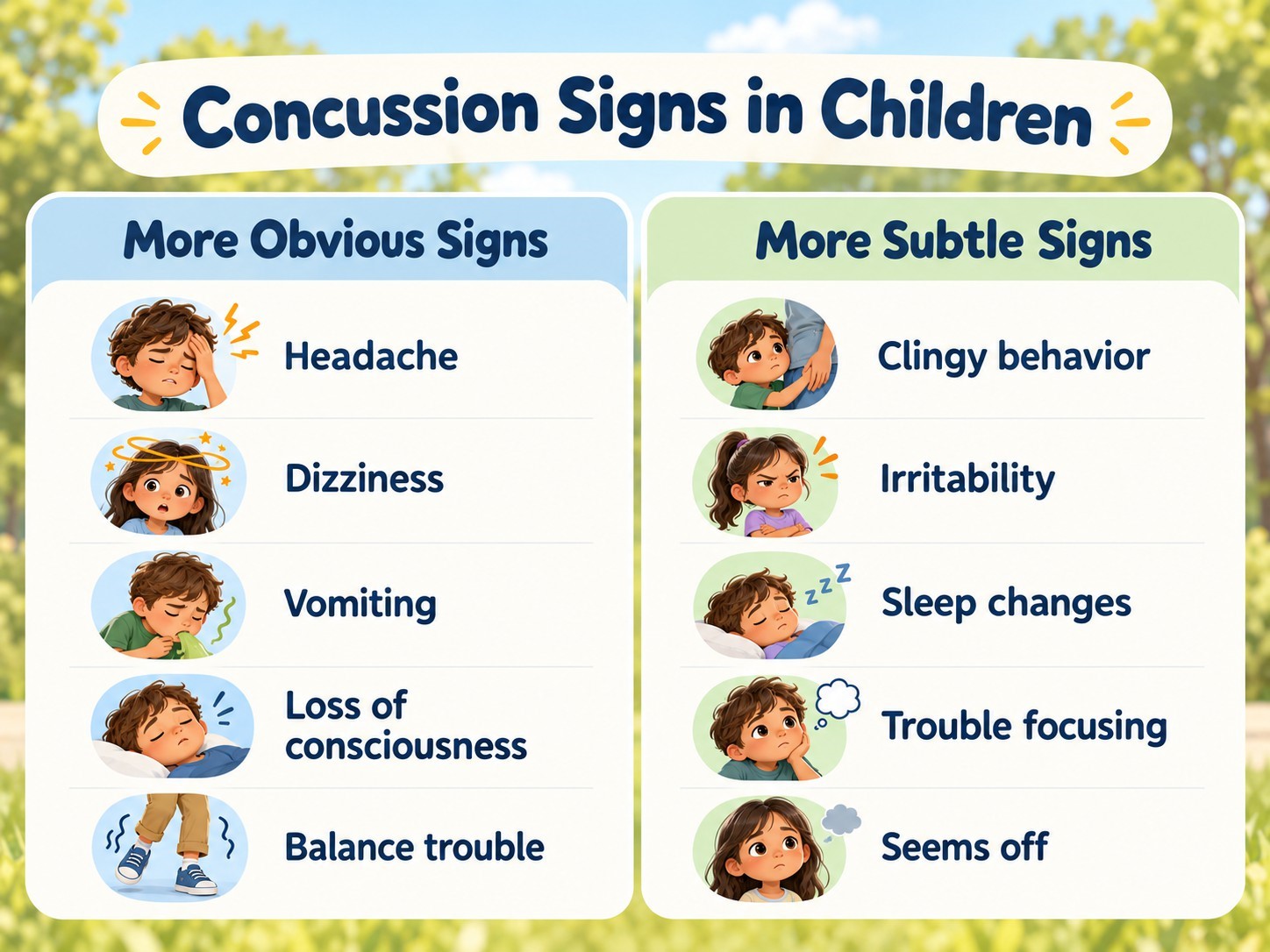
Symptoms can be obvious or subtle. New changes after a head injury deserve attention even if a child initially appears well.
Beyond the Obvious Symptoms
Emotional and behavioral changes may be important after a head impact, particularly in children who cannot describe dizziness, headaches, or cognitive fatigue. A shift in personality, sleep, or classroom functioning warrants attention.
Changes families may notice
Increased clinginess, tearfulness, irritability, or aggression
New anxiety, sadness, or emotional reactivity
Sleeping more than usual or changes in sleep routine
Difficulty focusing, paying attention, or keeping up in class
When a Head Injury Is an Emergency
Some injuries require immediate medical care. Concussions can also happen without vomiting, loss of consciousness, or an obvious wound. Do not dismiss persistent or worsening symptoms.
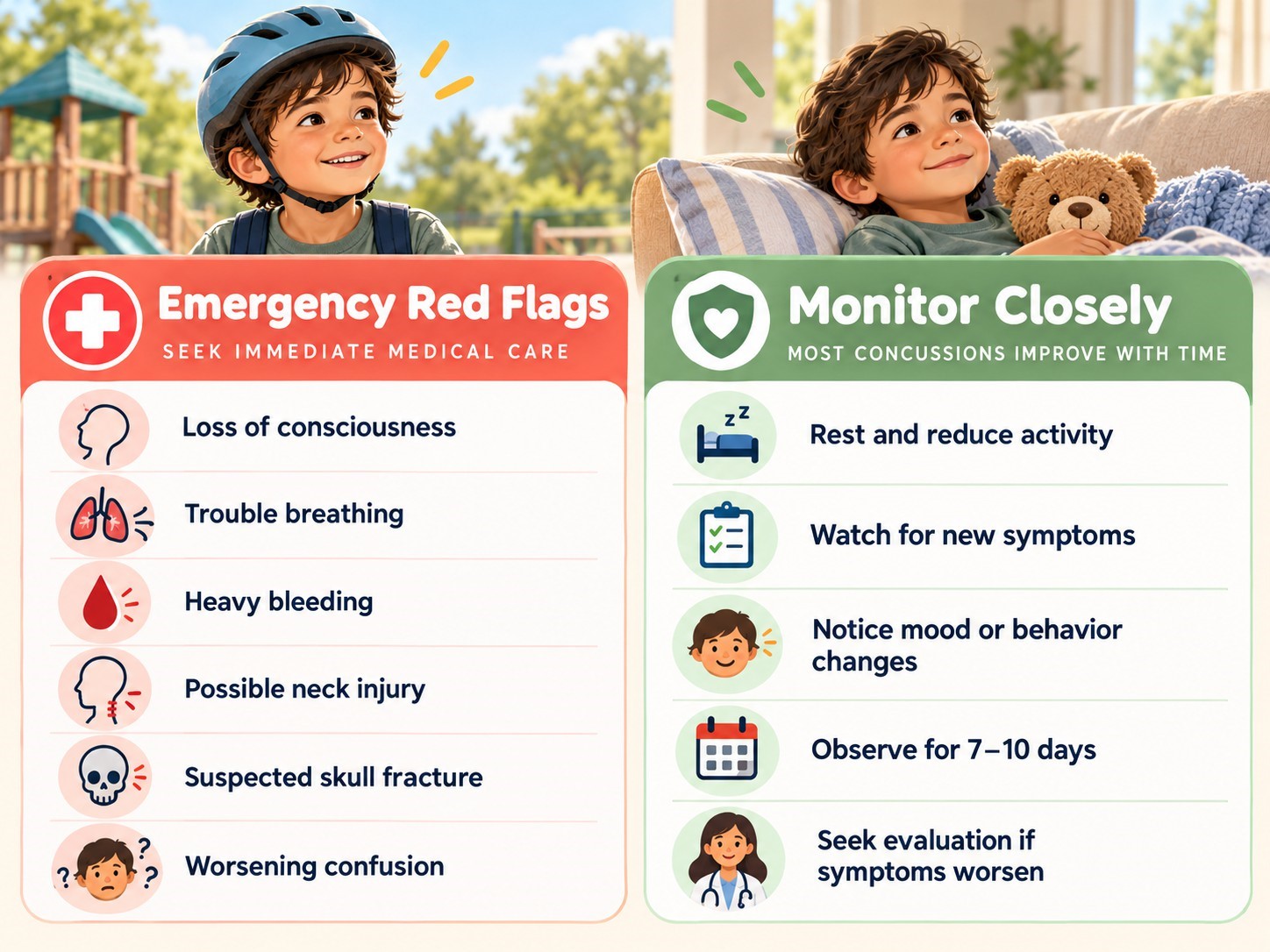
Important: Worsening confusion, repeated vomiting, seizures, difficulty waking, or a worsening headache require emergency care. For suspected concussion without emergency signs, arrange a timely clinical evaluation.
Thoughtful Monitoring & Follow-Up
After a non-emergency head injury, watch for new or worsening symptoms, particularly during the first 24–48 hours and the days that follow. Keep routines calmer and avoid sports or further head impacts until a clinician provides appropriate guidance.
Seek assessment when concussion is suspected. After a brief period of relative rest, children typically benefit from a gradual return to light, symptom-limited activity and school—with support when needed—rather than prolonged strict rest.
Why Baseline Brain Testing Can Help Young Athletes
A baseline assessment provides a reference point before a season or other higher-risk activity. After an injury, clinicians can compare new findings with the child’s earlier function.
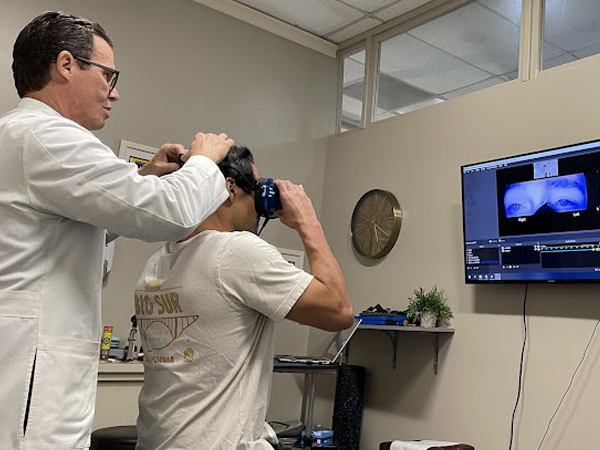
Depending on the setting, testing may include balance, eye movements, visual responses, and computerized cognitive measures such as ImPACT. These tools complement—but do not replace—a clinical concussion evaluation
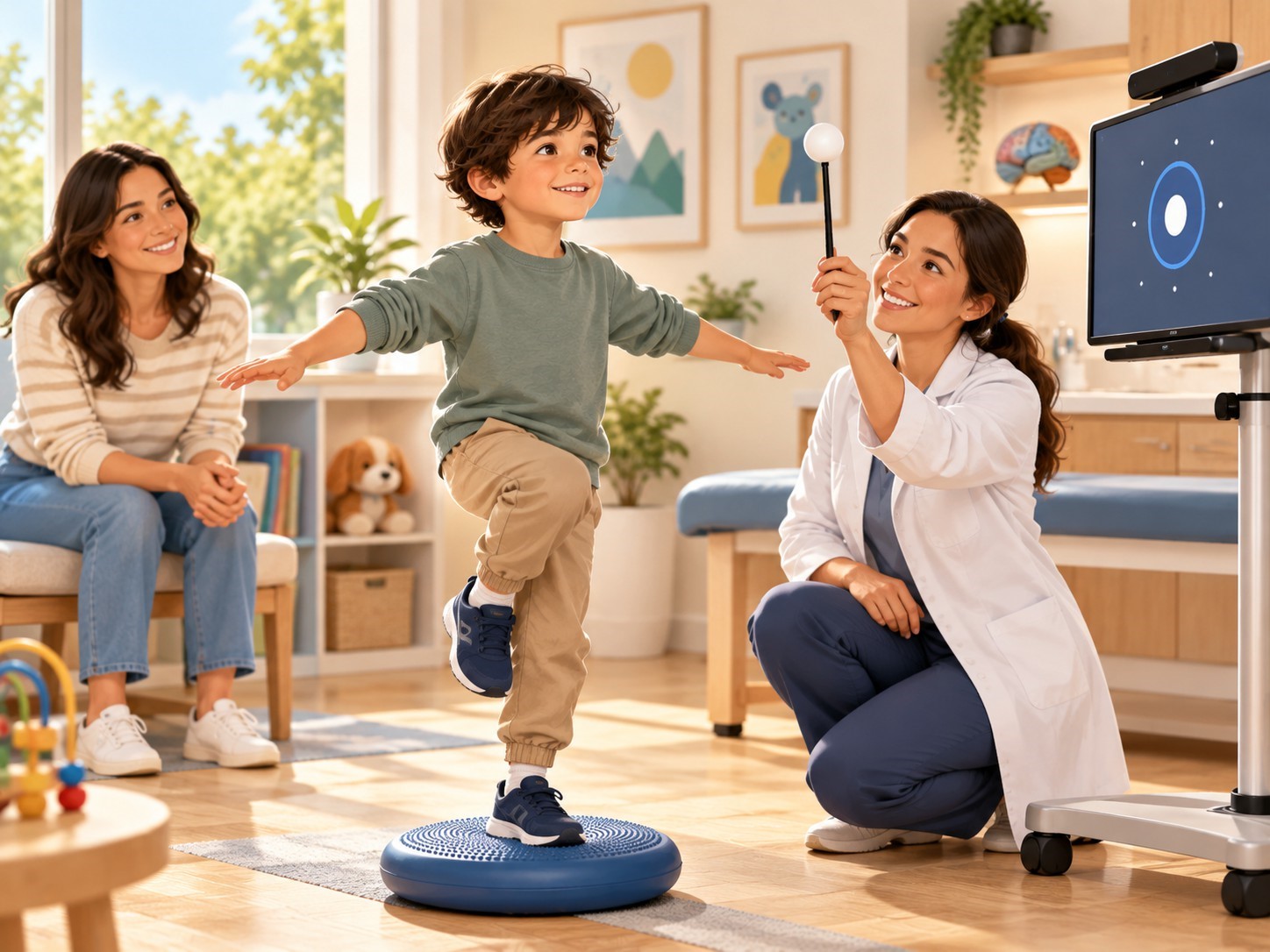
Assessment can help identify changes in balance and visual tracking after injury.
Recovery Is More Than a Sports Decision
Brain health touches learning, emotional regulation, coordination, confidence, and relationships. If symptoms persist, families may benefit from targeted evaluation of balance, eye movements, vestibular function, attention, or activity tolerance.
Many children recover well with early recognition, appropriate activity guidance, school accommodations when needed, and follow-up care suited to their symptoms. Persistent difficulties may warrant specialized rehabilitation.
Progress may look like
Improved mood and emotional regulation
Better attention and participation in school
More consistent sleep and less irritability
Improved balance, movement, and coordination
Confidence returning as symptoms resolve

“The goal is not simply to wait and see. It is to observe, seek care when indicated, and support a safe return to daily life.”
The Bottom Line for Parents
A pediatric concussion can happen without a dramatic injury. Early signs may be headaches or dizziness—or behavior changes, altered sleep, or new trouble focusing. If a concussion is suspected, seek medical guidance rather than assuming the child is fine because the injury looks minor.
Frequently Asked Questions
Can my child have a concussion without vomiting or passing out?
Yes. Neither vomiting nor loss of consciousness is required for a concussion diagnosis.
How long should I watch my child?
Monitor closely immediately after the injury and in the days that follow. Seek medical advice when symptoms appear or worsen; urgent warning signs require emergency care.
Which subtle signs are most common?
Changes in behavior, mood, sleep, attention, and school performance can all occur after a concussion.
Should my child have baseline testing before sports?
It can provide a useful comparison point, especially for young athletes, but it is not required to diagnose a concussion and cannot replace clinical judgment.
Can children fully recover?
Many children recover well with appropriate care. Some require additional follow-up and targeted support if symptoms persist.
ABOUT BAGNELL BRAIN CENTER
An individualized, brain-first approach to neurological assessment and rehabilitation for children and adults.
bagnellbraincenter.com | 305-259-8755
Educational information only; not a substitute for emergency or individualized medical care. Illustrations are conceptual.



© 2026 Bagnell Brain Center. All Rights Reserved. Accessibility Statement - Privacy Policy - Sitemap
Powered by: 