
What Really Happens to the Brain During a Concussion?
Understanding the invisible injury — and why a normal scan does not always mean normal brain function.
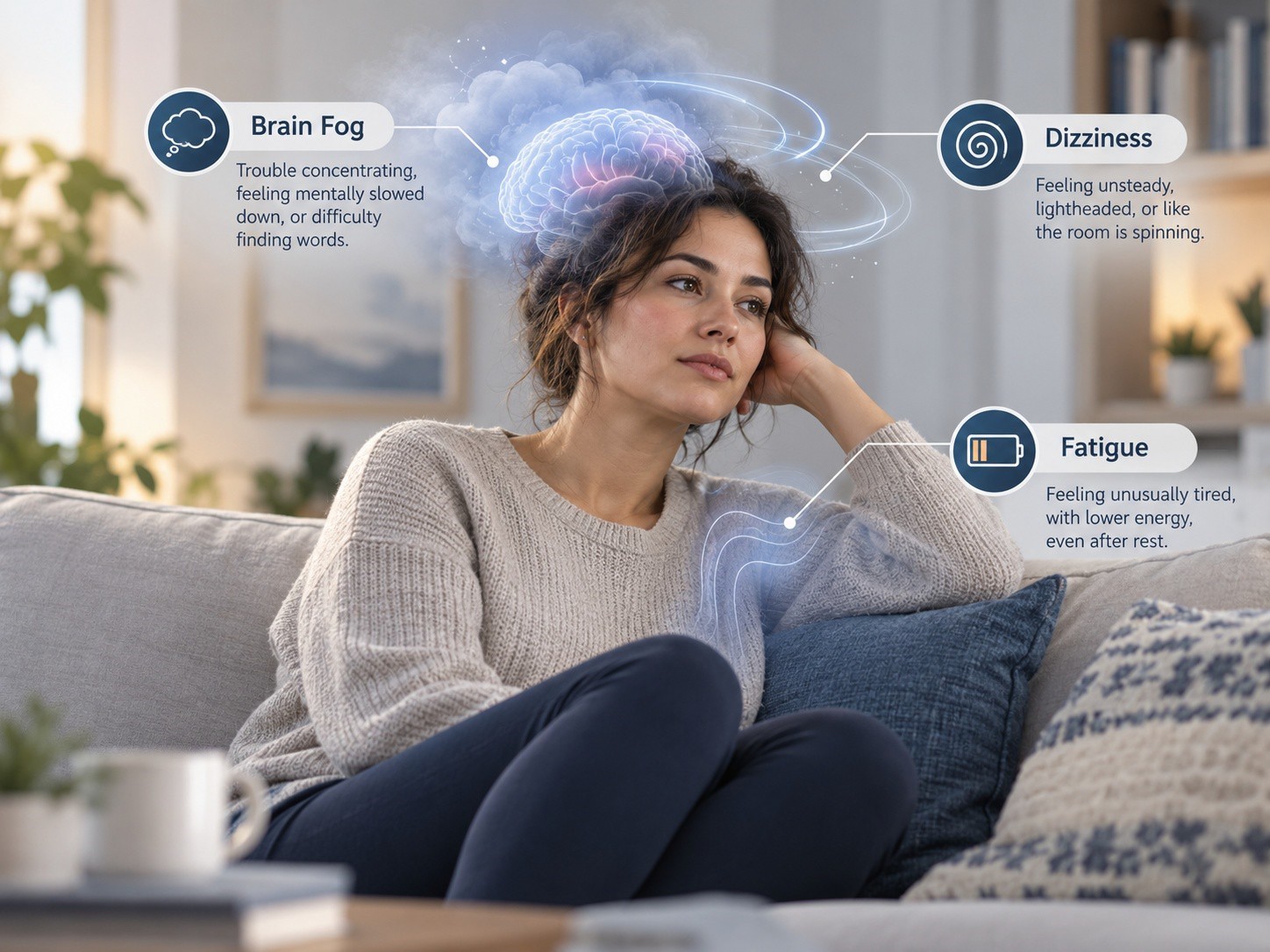
A concussion is often called an invisible injury because its effects can be real, disruptive, and difficult to see on standard imaging. People may look “fine” on the outside while experiencing dizziness, fatigue, headache, brain fog, or trouble concentrating.
Normal imaging does not always mean normal function.
In this article, you’ll learn what actually makes an injury a concussion, why symptoms can show up later, what happens inside the skull during an impact, and why recovery should focus on function — not scans alone.
Why Concussions Are Called the Invisible Injury
One of the biggest frustrations after a head injury is feeling dismissed. People often describe symptoms that are hard to explain: dizziness, brain fog, fatigue, headaches, trouble focusing, mood changes, or simply feeling “off.”
That’s why concussions are so often misunderstood. You can have a real injury without a visible fracture, without obvious swelling on imaging, and without anyone around you realizing how much your function has changed.

A concussion is a functional injury, not just a structural one. It can affect how the brain works in the moment and how it recovers over time.
What actually makes an injury a concussion?
A concussion is also called a mild traumatic brain injury (mTBI). “Mild” refers to the injury category, not the person’s experience. Symptoms can still be disruptive and life-altering
You do not need to lose consciousness.
Many people with clear concussion symptoms never black out.
You can have a concussion without:
• vomiting
• a visible bump or mark
• a scan showing anything abnormal
• a dramatic “big hit” story
What Happens Inside the Skull During an Impact?
The brain is soft and delicate. When the head stops suddenly — from a blow, fall, collision, or whiplash-type force — the brain can continue moving inside the skull. Different parts may shift at different speeds, stretching and irritating delicate nerve fibers.
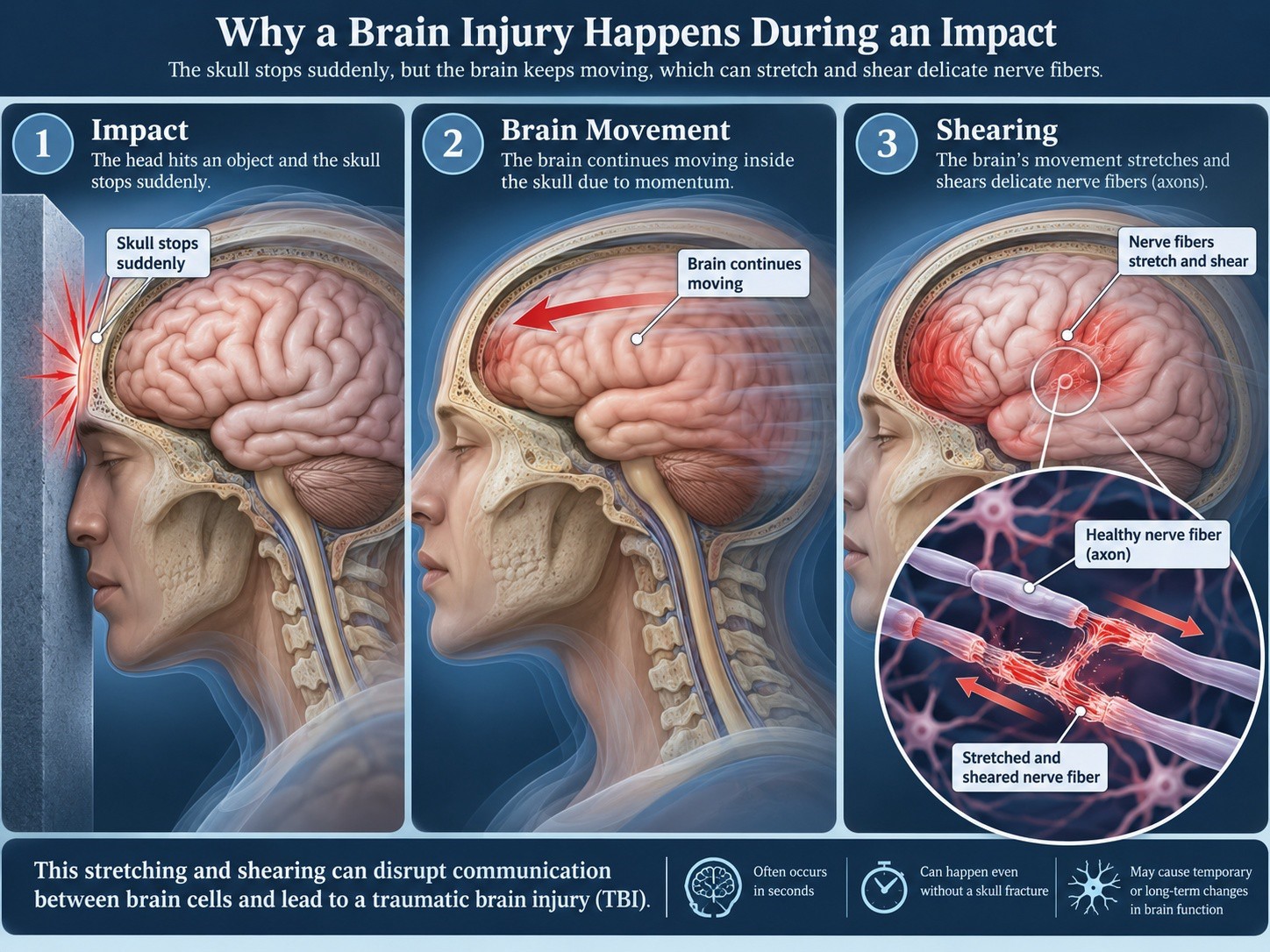
This stretching and shearing can affect:
- Thinking and memory
- Mood and emotional regulation
- Balance and coordination
It can also affect:
- Eye tracking and visual processing
- Energy production and stamina
- Exercise tolerance
Not every impact leads to the same result. Force matters, but so do age, prior brain health, and the person’s ability to heal afterward. That’s one reason concussion care should be individualized.
Why Symptoms Can Show Up Later
Some symptoms are immediate, while others become more obvious hours or days later. Early compensation, rest, or adrenaline can mask the problem at first. Once normal life resumes, the brain has to do more — and symptoms can emerge more clearly.
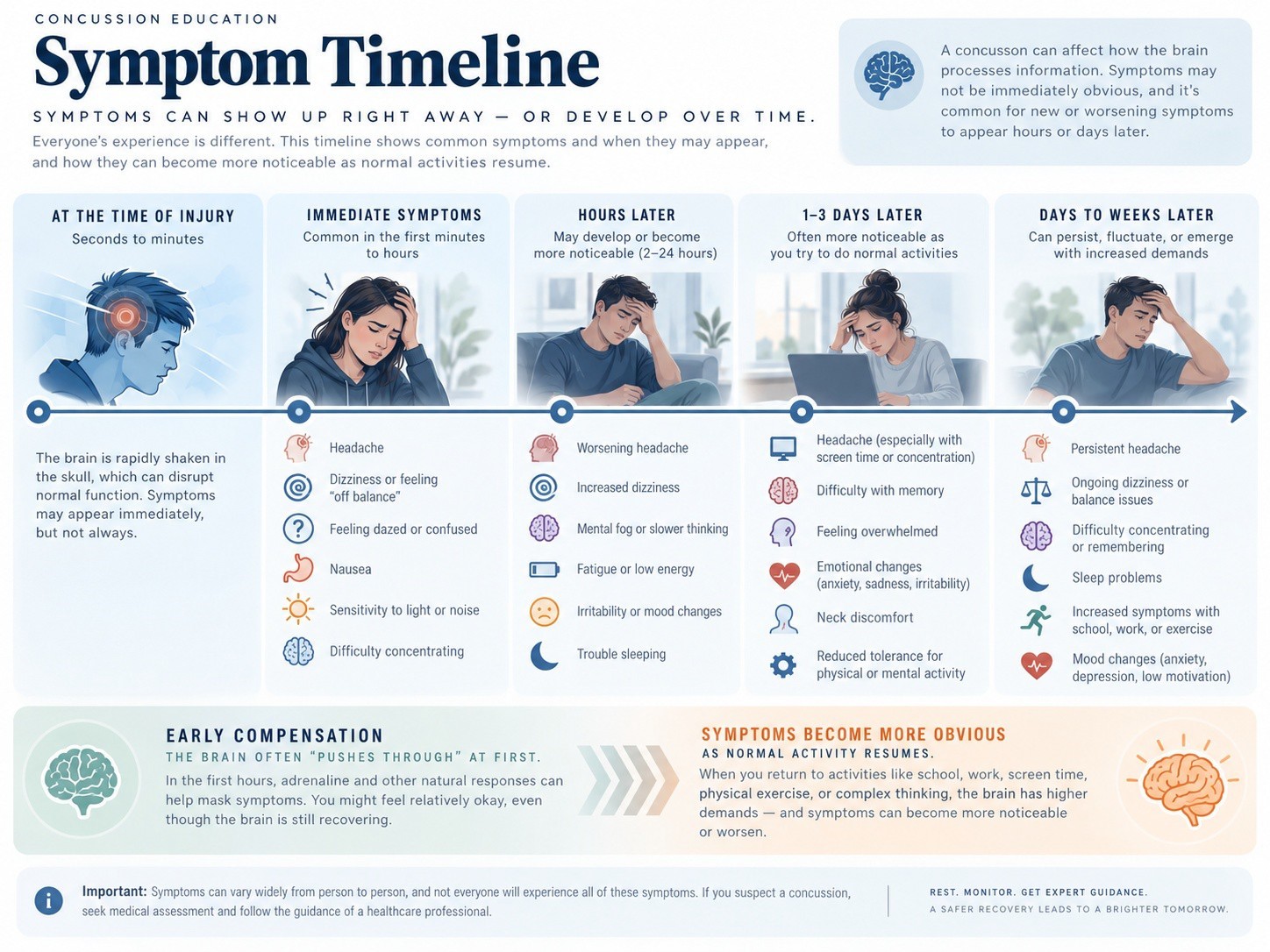
Delayed symptoms are common in both children and adults. A child may seem fine after an injury, then later struggle with schoolwork or behavior. An adult may initially feel “okay,” then notice problems with driving, screens, work, or exercise once demands increase.
Why Normal CT and MRI Results Don’t End the Conversation
Conventional imaging is important for ruling out dangerous structural problems like bleeding, fracture, or significant swelling. But a normal scan does not mean the brain is functioning normally.
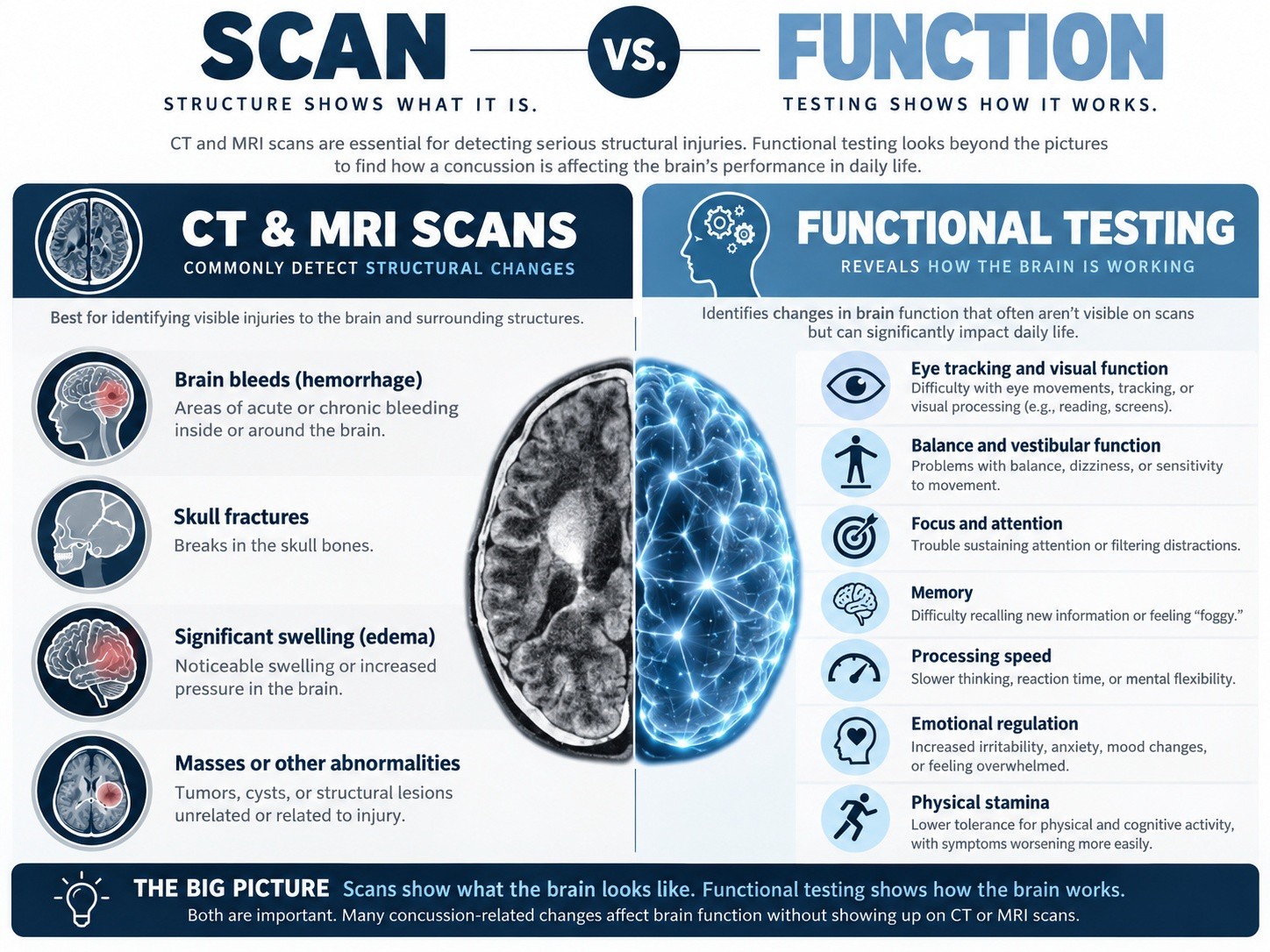
In other words, a scan may show what the brain looks like, but functional testing helps reveal how the brain is working in everyday life
What Recovery Should Focus On After a Concussion
Recovery is not just about waiting for time to pass. It is about supporting the systems the brain uses to heal and function. That often means paying attention to the whole picture.
Recovery may need to include:
- Sleep and hydration
- Nutrition and gut support
- Movement tolerance and pacing
- Screen tolerance
- Balance and vision support
- Graded return to activity
- Targeted rehab for the systems affected
Why symptoms can linger:
After injury, the brain often shifts into a low-energy state to conserve resources. That can look like fatigue, slowed thinking, reduced motivation, balance problems, or lower exercise tolerance. Lingering symptoms do not automatically mean permanent damage — they often mean the brain still needs support.
Frequently Asked Questions
Do you need to hit your head to have a concussion?
No. A concussion can happen from rapid acceleration-deceleration forces, including whiplash-type motion.
Can a concussion happen without losing consciousness?
Yes. Many people with concussion symptoms never black out.
Why was my scan normal if I still feel symptoms?
CT and MRI look for structural damage. They do not measure how well the brain is functioning.
Can concussion affect the gut?
Yes. The brain and gut are closely connected, and some people notice appetite changes or gut symptoms after a concussion.



© 2026 Bagnell Brain Center. All Rights Reserved. Accessibility Statement - Privacy Policy - Sitemap
Powered by: 